
CACAO IN RITUAL
Cacao at the Ofrenda
Day of the Dead, Samhain, and the Nights We Remember
At the turn of every autumn, as the light shortens, people across the world have made room for their dead. In Ireland and Scotland, fires burned on the hills for Samhain. In English villages, children went door to door for soul cakes. And in Mexico, for Día de los Muertos, the Day of the Dead, families still build ofrendas heavy with marigolds, candles, bread, and cups of chocolate, steaming for those who are coming home.
Different lands, different forms, the same impulse: to set a place for the ones we've lost. And in one of these traditions, cacao has been at the table for a very long time.
Cacao and Chocolate in Day of the Dead Traditions
Long before Día de los Muertos took its current shape, cacao belonged to the rites of the dead in Mesoamerica. Archaeologists have found cacao residue in vessels placed in Maya tombs, provisions for the journey. The Mexica linked cacao with the heart and with blood, the very substance of life.
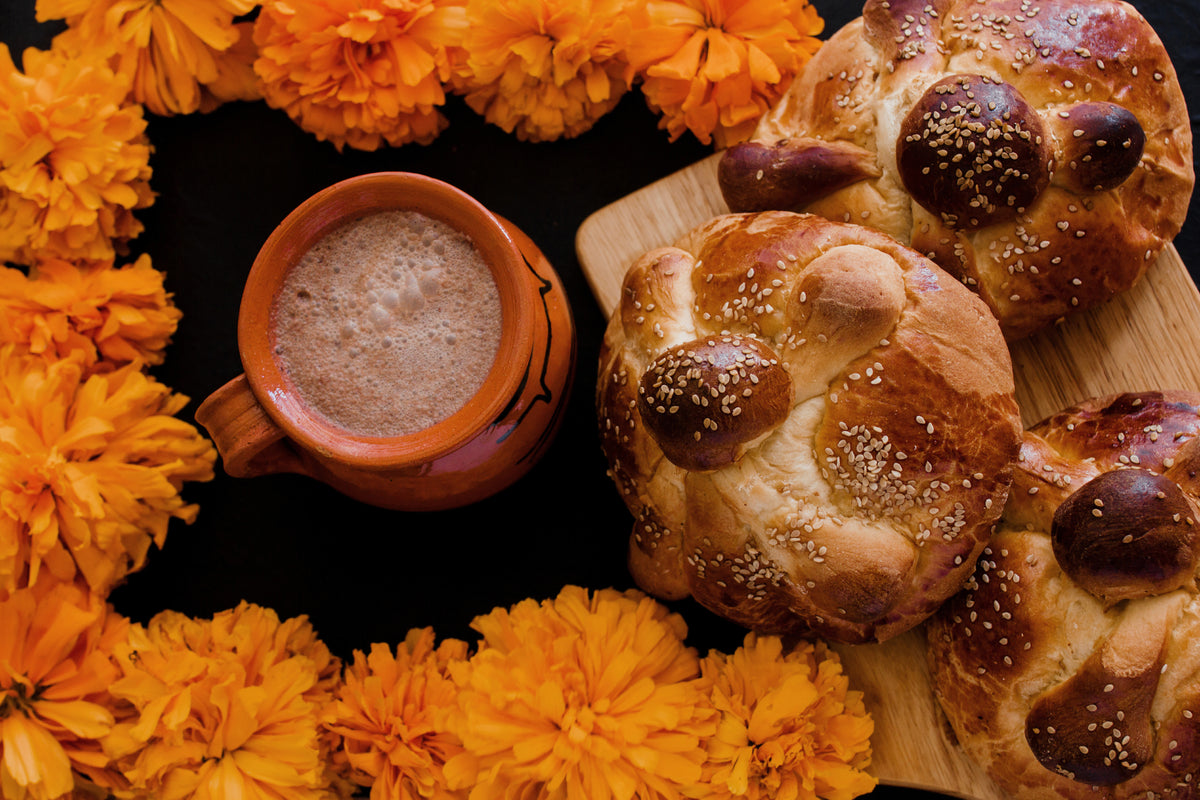
That thread runs unbroken into the Day of the Dead altars of today. In Oaxaca, one of the heartlands of Día de los Muertos, chocolate is a staple of the ofrenda. It's ground by hand, whisked into hot drinks, and set beside pan de muerto for visiting souls. Mole negro, a dish rich with cacao, is cooked for the dead and shared among the living.
Offering a cup of chocolate to someone who has passed is not a modern gesture here. It's an old one, carried forward through centuries of kitchens and altars.
Halloween, Samhain and Día de los Muertos: One Season of Remembering
It's no accident that Halloween and the Day of the Dead arrive within days of each other. Both grew around the same stretch of the calendar: All Hallows' Eve on October 31, then All Saints' Day on November 1 and All Souls' Day on November 2. In Mexico, these Catholic feasts met Indigenous traditions of honoring the dead, and Día de los Muertos was born of that meeting.
Further back still lies Samhain, the Gaelic festival that marked the end of harvest and the turn into the dark half of the year. Early Irish tales describe Samhain as a time when the doors to the Otherworld stood open. It's a night often spoken of as one when the veil grows thin. Bonfires were lit, and in later centuries people read the future in apples, hazelnuts, and mirrors. Turnips were carved into lanterns to light the way home.
Look closely and the parallels are striking. In parts of Ireland, households left food and drink out for the returning dead and kept the hearth lit through the night. In Britain, soul cakes were baked and given in exchange for prayers for the departed, a bread for the dead not so far from pan de muerto. Whether it's a candle in a window or a candle on an ofrenda, a cake at the door or bread on the altar, the gesture is the same. You are remembered. There is a place for you here.
How to Create a Cacao Ritual for Your Ancestor Altar
Whatever your lineage, this season offers an invitation to pause and honor those who came before you. Cacao, with its long history at the altar of the dead, can be part of that. Here is one way to begin:
- Make a space. A shelf, a windowsill, or a corner of a table. Add candles, flowers (marigolds if you can find them), photographs, and small objects that belonged to or remind you of your loved ones.
- Set out an offering. Something they loved to eat or drink, or bread in the spirit of soul cakes and pan de muerto.
- Prepare your cacao slowly. Let the making be part of the ritual (see below). Pour one cup for yourself and, if it feels right, one for the altar.
- Speak their names. Tell a story, read a letter, or simply sit with the memory. Invite others to join and share their own.
- Weave in your own traditions. A Samhain fire, a lantern in the window, a recipe from your grandmother's kitchen. The ritual is yours to shape.
- Leave room for everything that comes. Grief, laughter, and gratitude can all sit at the same table.
A Day of the Dead Cup of Cacao
This recipe is inspired by the chocolate traditionally whisked for Oaxacan ofrendas, where cacao is often ground with cinnamon and almonds and frothed by hand. It's a simple way to bring that spirit to your own altar.
- 28- 42 g Keith's Cacao, chopped
- 200 ml hot water (just off the boil)
- A pinch of cinnamon
- A few drops of almond extract, or a spoonful of ground almonds (optional)
- A little panela or honey to taste (optional)
Warm the water gently in a small pan and add the cacao, stirring until it melts completely. Add the cinnamon, almond and sweetener, if using. Whisk briskly, or froth with a molinillo if you have one, until a soft foam forms on top. Pour slowly, and as you do, bring to mind the person you are honoring. Serve it the Oaxacan way, with a slice of homemade plant-based pan de muerto for dipping.
people often ask
- Is chocolate part of Day of the Dead?
Yes. Chocolate is a traditional offering on Día de los Muertos altars, especially in Oaxaca. There it is prepared as a hot drink and placed beside pan de muerto, and it appears in dishes like mole negro. Cacao's connection to death rites in the region goes back to pre-Hispanic times.
- What goes on an ofrenda?
Ofrendas usually include photographs of the departed, candles, marigolds (cempasúchil), water, pan de muerto, sugar skulls, and the foods and drinks the person loved, often including chocolate. Many also include copal incense and papel picado.
- How is Samhain connected to Halloween?
Samhain was a Gaelic festival marking the end of harvest and the start of winter. Many Halloween customs, such as carved lanterns, divination games, and the sense of the dead being near, grew out of Samhain folk traditions blended with the Christian feast of All Hallows.
- Can I make an ancestor altar if I'm not Mexican?
Honoring the dead is part of nearly every culture. You can create your own altar of remembrance drawing on your own lineage and traditions. If you're inspired by Día de los Muertos, learn about its roots and approach it with respect. Honor the tradition as something living, rather than borrowing its imagery as decoration.
A Place at the Table
From the hills of Samhain to the altars of Oaxaca, this is the season of remembering. However you mark it this year, may there be candlelight, stories, and a warm cup set out for someone you love.
Keith's Cacao is here for your gatherings this season.
-
Ceremonial Cacao
Regular price From $33.00Sale price From $33.00 Regular priceUnit price / per -
Hand-Peeled Cacao Beans
Regular price $55.00Sale price $55.00 Regular priceUnit price / per